
Quick Answer
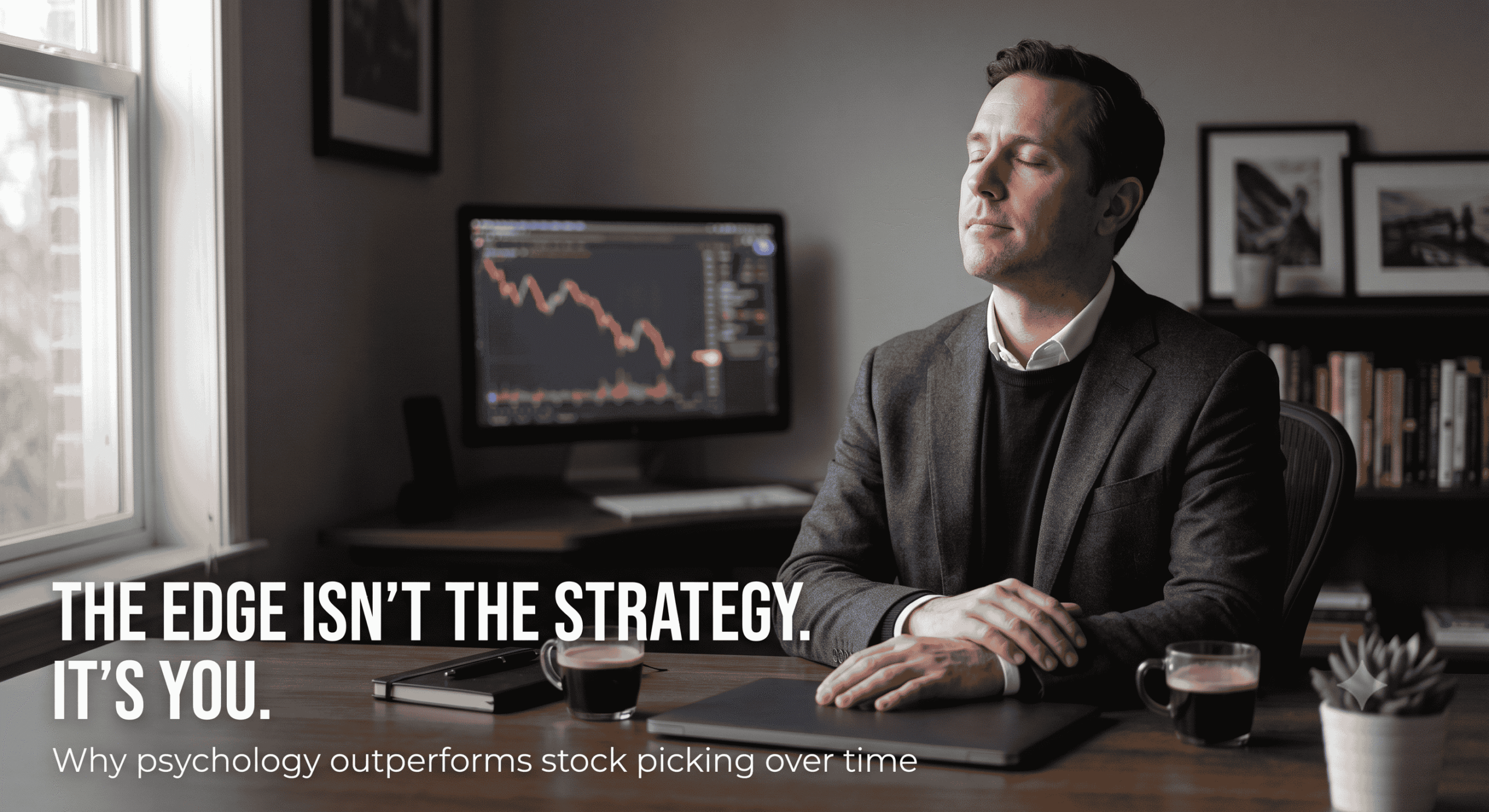
Psychological edge in investing is one of the most overlooked factors behind long-term wealth creation. While most investors focus on stocks, ETFs, and market forecasts, successful investing often comes down to mindset, discipline, risk management, and emotional control.
Many investors spend years studying stocks, charts, and financial statements but never develop the mental skills required to apply that knowledge when money is actually at risk.
Why You Can Trust This Guide
This guide is based on decades of observed investor behavior, behavioral finance principles, performance psychology, decision-making research, and real-world market patterns.
Rather than focusing on technical indicators or stock picks, it explores the often-overlooked mental frameworks that drive long-term investment success.
The Biggest Investing Myth Nobody Talks About
Most people believe successful investors win because they:
- Have better information
- Use better software
- Find stocks earlier
- Are naturally gifted
Reality is different.
Many investors know exactly what they should do.
Few actually do it.
The problem is rarely a lack of information.
The problem is the inability to act correctly when emotions intensify.
The market rewards behavior more than intelligence.
Why Psychological Edge in Investing Matters More Than Stock Picking?
The psychological edge is the ability to:
- Stay disciplined during market panic
- Follow a process instead of emotions
- Accept uncertainty
- Manage risk objectively
- Think independently
- Recover quickly from mistakes
It is the difference between:
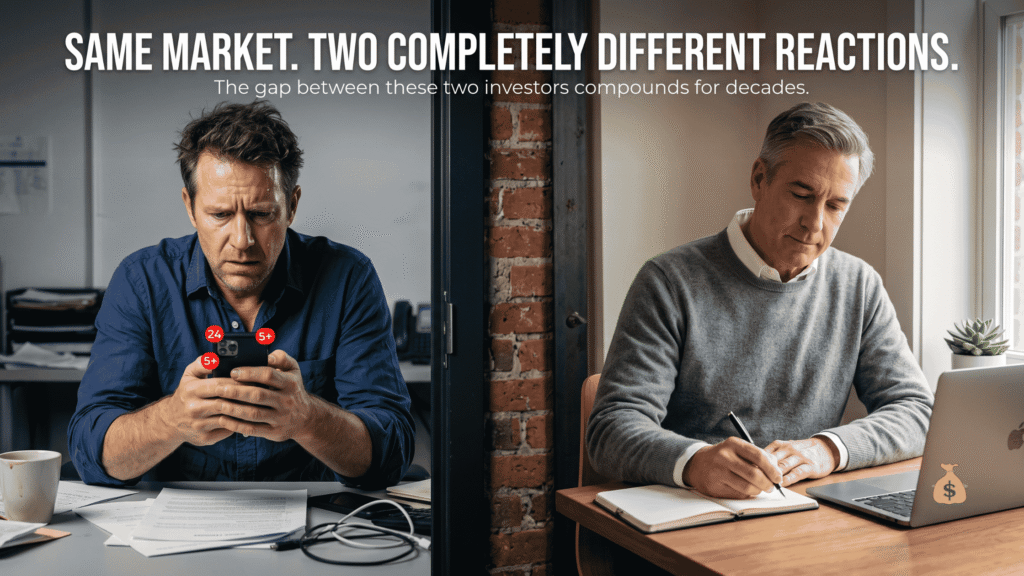
| Average Investor | Investor With Psychological Edge |
|---|---|
| Reacts emotionally | Responds strategically |
| Follows headlines | Follows process |
| Chases performance | Focuses on probability |
| Avoids discomfort | Accepts uncertainty |
| Needs certainty | Operates despite uncertainty |
| Blames the market | Reviews personal decisions |
This difference may appear small.
Over decades, it becomes enormous.
Why Smart Investors Often Underperform
Intelligence alone does not create investment success.
Many highly educated individuals struggle because they:
- Need perfect information
- Overanalyze decisions
- Fear making mistakes
- Become emotionally attached to opinions
The market rarely offers certainty.
Waiting for certainty often means missing opportunity.
The best investors learn to make decisions with incomplete information while continuously adapting as new information appears.
The Five Psychological Traits of Consistently Successful Investors
1. Goal-Oriented Thinking
Successful investors think differently.
They do not simply hope for good returns.
They create a process.
Instead of asking:
Which stock should I buy?
They ask:
What system will help me make better decisions over the next decade?
Goal-oriented investors focus on:
- Portfolio objectives
- Risk-adjusted returns
- Capital preservation
- Long-term compounding
- Continuous improvement
Practical Example
A reactive investor checks portfolio performance daily.
A goal-directed investor reviews progress against a 10-year wealth-building plan.
The second investor often achieves better results.
2. Emotional Self-Awareness
Most losses begin emotionally before they happen financially.
Investors often experience:
- Fear
- Overconfidence
- Frustration
- Regret
- FOMO
- Impatience
Self-awareness means recognizing these emotions before they affect decisions.
Ask yourself:
- Am I buying because I researched the company?
- Or because everyone on social media is talking about it?
That simple question prevents many expensive mistakes.
3. Controlled Risk-Taking
Many people misunderstand risk.
Risk is not something successful investors avoid.
Risk is something they manage.
They understand:
- Every investment contains uncertainty
- Losses are unavoidable
- Capital protection is essential
- Position sizing matters
Successful investors rarely make one decision that destroys their future.
They survive long enough to benefit from compounding.
4. Independent Thinking
One of the hardest skills in investing is thinking independently.
Humans are naturally influenced by:
- Friends
- Media
- Experts
- Social networks
- Market sentiment
Yet major opportunities often appear before consensus recognizes them.
Independent thinking does not mean being contrarian for the sake of it.
It means developing conclusions through evidence rather than popularity.
Questions Great Investors Ask
- What assumption is everyone making?
- Is that assumption correct?
- What could change?
- What does the market seem to ignore?
These questions uncover opportunities others miss.
5. Resilience
Every investor eventually experiences:
- Mistakes
- Drawdowns
- Missed opportunities
- Market crashes
Resilience determines whether they recover.
Great investors do not avoid failure.
They learn from it faster than others.
The ability to analyze a mistake without becoming emotional is one of the strongest investing advantages possible.
The Hidden Psychology Behind Bad Investing Decisions
Loss Aversion
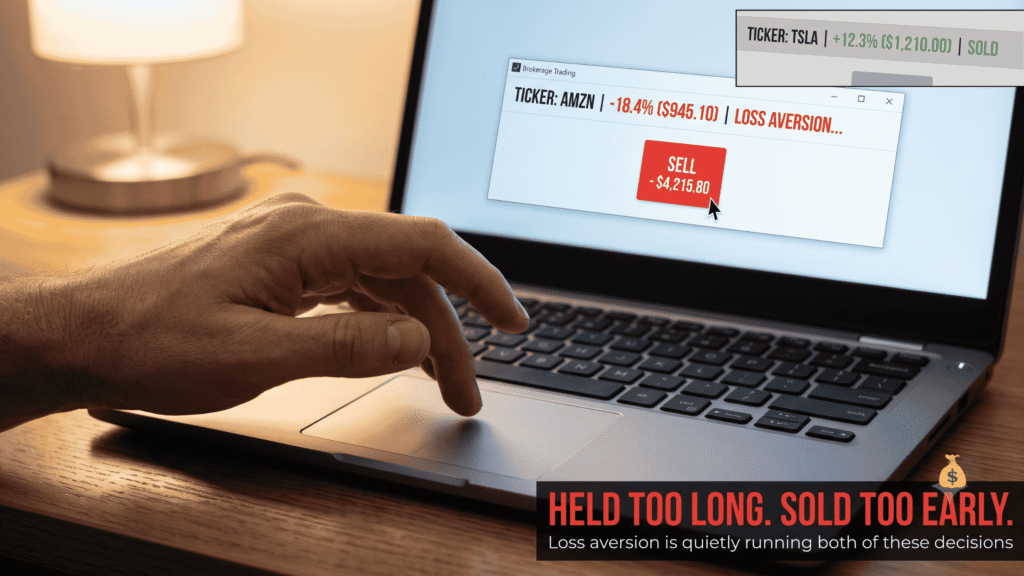
People typically feel losses more intensely than gains.
As a result investors:
- Hold losing positions too long
- Sell winners too early
- Avoid necessary changes
This behavior quietly destroys performance.
Confirmation Bias
Once investors form an opinion, they seek evidence supporting it.
They ignore contradictory information.
This creates blind spots.
Overconfidence
Overconfidence usually appears after success.
Investors believe:
- Their skill increased
- Risk decreased
- Rules no longer apply
Many major losses begin this way.
Availability Bias
Recent information feels most important.
A recent crash makes investors fear all stocks.
A recent rally makes investors believe markets only go up.
Neither assumption is reliable.
How to Build a Strong Investor Mindset
Maintain an Investment Journal
One of the most underrated tools.
Record:
- Why you bought
- Expected outcome
- Risks considered
- Position size
- Emotional state
Review it regularly.
Patterns appear surprisingly quickly.
Create Decision Checklists
Before making any investment:
- Why am I buying?
- What could prove me wrong?
- What is the downside?
- What is the expected return?
- How long am I willing to hold?
Checklists reduce emotional decision-making.
Create Decision Checklists
Before making any investment:
- Why am I buying?
- What could prove me wrong?
- What is the downside?
- What is the expected return?
- How long am I willing to hold?
Checklists reduce emotional decision-making.

The Concept of Strategic Patience
Many investors underestimate patience.
Patience is not inactivity.
Patience means:
- Waiting for quality opportunities
- Allowing investments time to develop
- Avoiding constant portfolio changes
The market often rewards disciplined waiting more than constant action.
Strategic patience creates clarity.
And clarity improves decisions.
The Concept of Strategic Patience
Many investors underestimate patience.
Patience is not inactivity.
Patience means:
- Waiting for quality opportunities
- Allowing investments time to develop
- Avoiding constant portfolio changes
The market often rewards disciplined waiting more than constant action.
Strategic patience creates clarity.
And clarity improves decisions.
Why Great Investors Embrace Uncertainty
Average investors seek certainty.
Great investors understand certainty does not exist.
They focus on probabilities instead.
Instead of asking:
Will this investment succeed?
They ask:
Does the probability justify the risk?
This subtle shift transforms decision-making.
Building Your Personal Psychological Framework
Create a system that answers:
Investing Philosophy
- Why do I invest?
- What is my time horizon?
- What level of risk is acceptable?
Risk Rules
- Maximum allocation per investment
- Maximum portfolio drawdown
- Exit criteria
Review Process
- Weekly review
- Monthly review
- Quarterly review
Learning Process
- Books
- Journals
- Research reports
- Performance evaluation
A strong framework eliminates many emotional reactions.
Common Signs You Are Trading Emotionally
Watch for these warning signals:
- Constantly checking portfolio prices
- Following social-media stock tips
- Changing strategy every month
- Increasing position size after losses
- Refusing to admit mistakes
- Seeking validation from others
If any of these are familiar, your emotions may be influencing decisions.
Practical Daily Habits of Psychologically Strong Investors
Morning
- Review market developments
- Focus on important information
- Ignore noise
During Market Hours
- Follow predefined rules
- Avoid emotional reactions
Evening
- Review decisions
- Document lessons
- Prepare for tomorrow
Consistency strengthens discipline.
How Market Crashes Create the Biggest Psychological Tests
Bear markets expose emotional weaknesses faster than any other event.
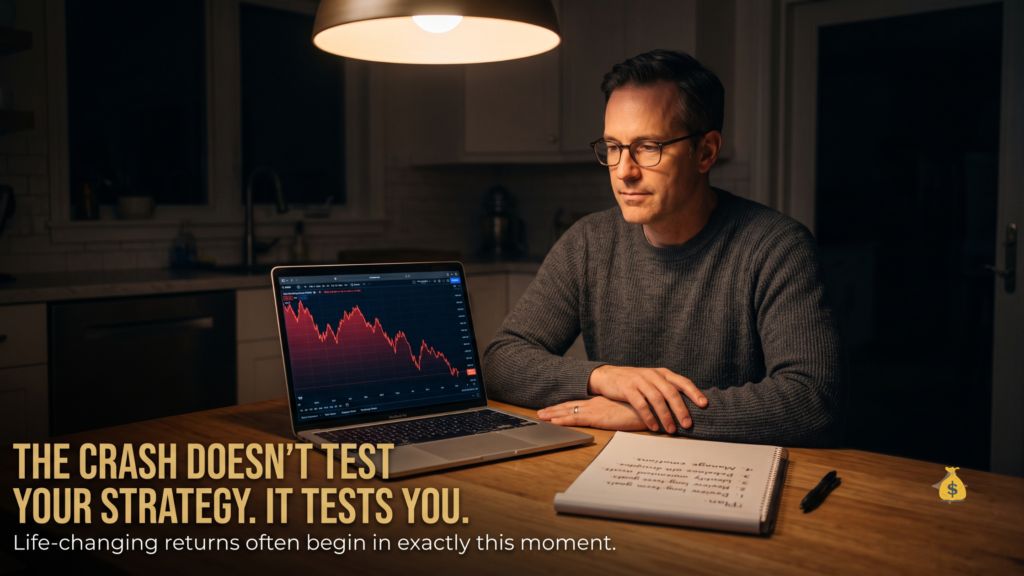
During crashes:
- Fear increases
- Confidence disappears
- News becomes extreme
The psychological edge allows investors to:
- Stay rational
- Protect capital
- Identify opportunities
- Avoid panic selling
Many life-changing returns begin during periods of maximum uncertainty.
Frequently Asked Questions
What is the psychological edge in investing?
The psychological edge is the ability to make rational investment decisions while managing emotions such as fear, greed, overconfidence, and anxiety.
Why do intelligent investors lose money?
Many intelligent investors struggle because knowledge alone is not enough. They often fall victim to emotional bias, poor risk management, or overconfidence.
Can investing psychology be learned?
Yes. Self-awareness, journaling, process-driven decision-making, and risk management can significantly improve investor psychology over time.
What is the biggest psychological mistake investors make?
Holding losing investments too long while selling winners too early is one of the most common psychological mistakes.
Does psychology matter more than stock analysis?
Both matter. However, even excellent analysis can fail if emotions interfere with execution and risk management.
How can I improve my investing discipline?
Use checklists, maintain an investment journal, create predefined rules, and evaluate decisions based on process rather than short-term outcomes.
Final Verdict
The greatest investment advantage is not a stock tip, trading indicator, or secret formula.
It is the ability to remain disciplined when others become emotional.
A strong psychological edge helps investors:
- Think independently
- Manage risk effectively
- Stay focused on long-term goals
- Learn from mistakes
- Operate confidently during uncertainty
Over time, these skills compound just like investment returns.
Expert Tip
If you want to improve your investing results immediately, start an investment journal today.
Not tomorrow.
Write down every investment decision, the reason behind it, and the emotions you felt when making it.
Within six months, you will identify behavioral patterns that most investors never recognize—and that awareness alone can significantly improve decision quality.